


Ragi Roti, also known as Nachni Roti, is a traditional flatbread from Karnataka made using finger millet flour. This nutritious and gluten-free roti is beloved for its earthy flavor, ease of preparation, and health benefits. Rich in fiber, calcium, and essential minerals, ragi is a staple in many South Indian households where it’s treasured for its wholesome goodness.
My mother often made ragi roti on busy mornings as a quick, nourishing breakfast served with coconut chutney or a dollop of fresh butter. The soft yet slightly crispy texture along with aromatic spices makes it an everyday delight that’s both comforting and fulfilling.
Ingredients for Karnataka Style Ragi Roti
-
2 cups ragi (finger millet) flour
-
1 medium onion, finely chopped
-
1-2 green chilies, finely chopped
-
A handful of fresh curry leaves, chopped
-
2 tablespoons grated coconut (optional)
-
2 teaspoons sesame seeds
-
1 teaspoon cumin seeds
-
Pinch of asafoetida (hing)
-
Salt to taste
-
Warm water (as needed to make the dough)
-
Oil or ghee for cooking
Step-by-Step Preparation
-
Mix the Dry Ingredients:
In a large mixing bowl, combine ragi flour, chopped onion, green chilies, curry leaves, grated coconut, sesame seeds, cumin seeds, asafoetida, and salt. -
Add Warm Water to Form Dough:
Gradually add warm water little by little and mix with your hands to form a soft, pliable dough. The dough should be moist but not sticky. Let it rest for about 10–15 minutes to let the flavors meld. -
Shape the Roti:
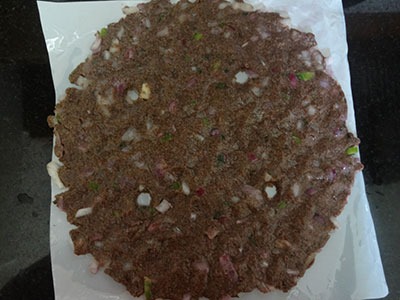
Wet your hands to handle the dough easily. Take a medium-sized ball of dough and place it on a greased banana leaf or a parchment paper sheet. Flatten it gently using your fingers or palm to form a thin round roti about 6-8 inches in diameter. You can make small holes in the roti to ensure even cooking. -
Cook on a Hot Griddle (Tava):
Heat a tava or flat griddle over medium heat. Slide the roti along with the banana leaf or parchment paper onto the hot tava. Carefully peel off the leaf/paper. Drizzle a teaspoon of oil or ghee on the roti and cook until golden brown, flipping once. Cook the other side similarly until slightly crisp edges develop. -
Serve Warm:
Serve ragi roti hot with coconut chutney, yogurt, or vegetable curry.
Tips for Perfect Karnataka Style Ragi Roti
-
Using fresh ragi flour ensures a sweet and nutty flavor, avoiding any bitterness caused by rancidity.
-
Warm water makes the dough soft and easy to roll out without cracking.
-
The addition of aromatic spices like cumin seeds and curry leaves gives a subtle, authentic taste.
-
Cooking on medium heat allows the roti to cook well inside without burning outside.
-
Alternative flattening tools can be a plastic sheet, butter paper, or banana leaf—make sure to grease it lightly for easy removal.
-
Ragi roti is a great option for those seeking gluten-free and wholesome meals.
Why Ragi Roti is Worth Including in Your Diet
Ragi roti not only satisfies hunger but also provides essential nutrients such as calcium and dietary fiber that support bone health and digestion. This roti is a low glycemic index food, making it an excellent choice for people managing diabetes. It’s a delightful way to include millets in your regular diet while enjoying authentic South Indian flavors.
Every time I make ragi roti, it reminds me of the healthy, simple meals from my childhood, and I love experimenting by adding grated veggies like carrots or beetroot for extra color and nutrition.